
The Father-Son Bond: How IO Interactive Made the Game I Wasn't Supposed to Play
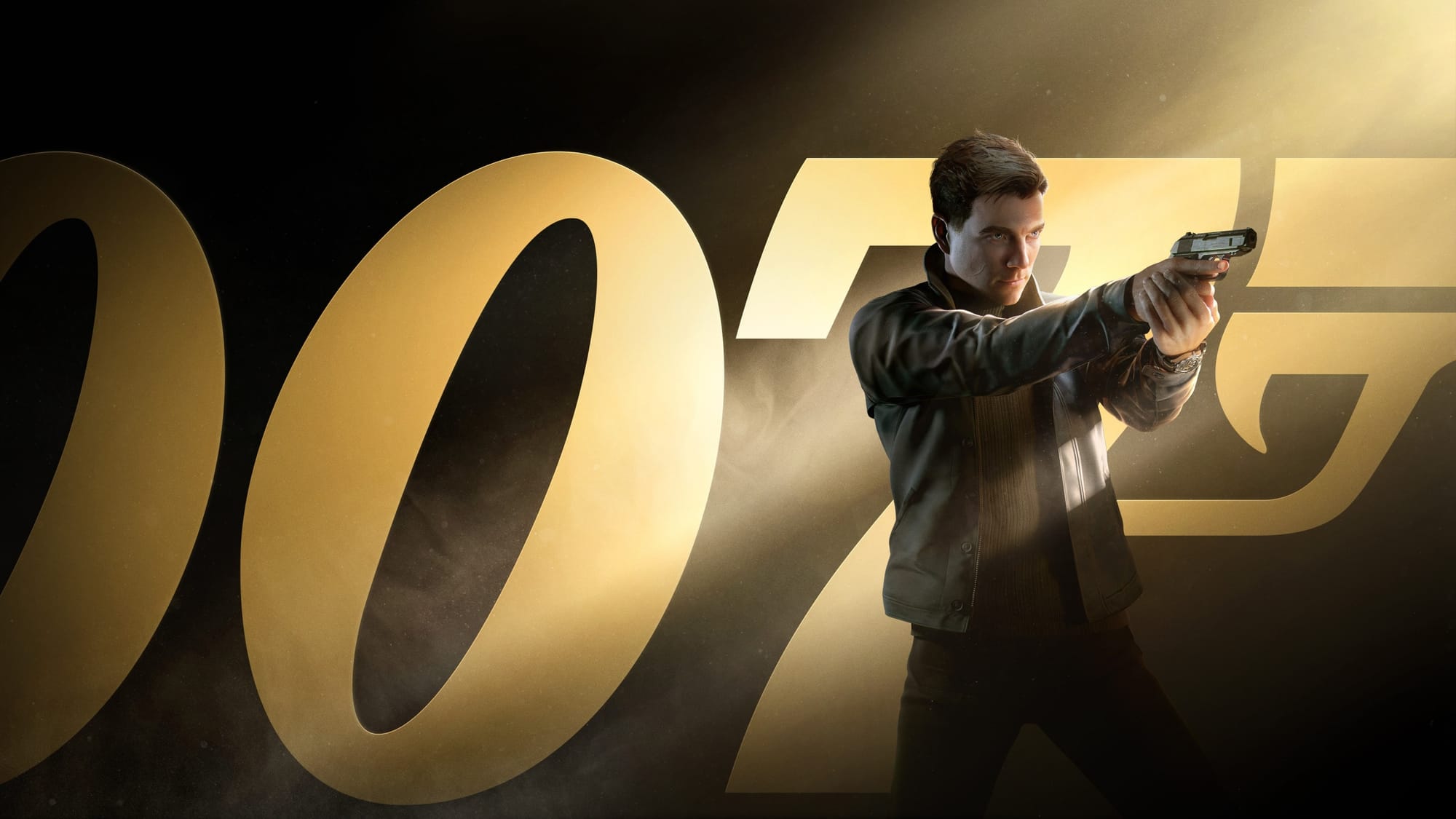
If you've ever huddled on the couch at seven years old, watching Roger Moore deadpan his way through Live and Let Die on a worn VHS while your father laughs at a joke you won't understand for another decade — and you carried that feeling with you ever since — then this one's for you.
James Bond isn't just a franchise to me. He's one of my first memories of being a person. My favorite Bond film is Skyfall — not because it's the best action movie (it is), but because it's the one that understands what Bond actually is: a man who is both the weapon and the wound, and still somehow looks good in a tuxedo while being both.
And if you're going to talk about Bond, you have to talk about the one-liners. The man is a walking quote generator — and the best ones are always a small, cruel pun about how the villain just died. A few that have stuck with me over the years:
"I'm sorry. That last hand nearly killed me."
— Casino Royale (2006), back at the poker table moments after Le Chiffre poisons him. The last hand nearly did kill him.
"He always did have an inflated opinion of himself."
— Live and Let Die (1973), over Dr. Kananga, whom Bond has just fed a compressed-gas pellet until the man swells up and bursts.
"She always did enjoy a good squeeze."
— GoldenEye (1995), for Xenia Onatopp, a villain who kills men by crushing them, undone by a tree and her own helicopter.
That last one is my favorite. Six words, and it tells you everything about the character. But I'll admit the middle one hits differently now — because Live and Let Die is the film that started all of this, the one flickering on the couch while my father laughed and I tried to keep up.
Now that my son is old enough to love video games the way I do, I wanted to introduce him to the world of spies. That's how I found myself watching him play 007 First Light — developed by IO Interactive, the same studio behind the Hitman series I already love — and learning that sometimes handing over the controller gives you the best seat in the house.
I wasn't supposed to play it. My son was. But watching him? That was the real game.
The Story: A Bond Before He Was Bond
First Light doesn't open on a finished spy. It opens on a 26-year-old — a talented, reckless Royal Navy air crewman named James Bond who's been pulled into MI6's training program and hasn't yet earned the numbers that come before the 7. When a rogue Double-O, 009, goes off the grid, this half-formed Bond gets thrown at a problem far bigger than his résumé.
That problem has a name: THEIA, a state-of-the-art quantum supercomputer donated to MI6 by a benefactor named Webb. THEIA has quietly revolutionized how the Service gathers intelligence and predicts threats — until you start asking who benefits from a machine that can see everything. Without spoiling the turns, the conspiracy runs inward, through the kind of trusted faces that make the best Bond betrayals hurt, and it escalates toward a second machine and a plan to reshape who governs Britain.
Here's the detail that made me grin as a computer science major who watched quantum computing go from chalkboard theory to actual hardware in real time: the writers named their all-seeing machine THEIA, after the Greek Titaness of sight and heavenly light — the mother of the sun, the moon, and the dawn. First light. The title isn't just about a young agent's first mission. It's about the first light of a machine that can suddenly see in the dark, and what men are willing to do to control the dawn.
The game doesn't dumb the science down. It uses it as fuel. And honestly — if Ian Fleming were alive today, he'd write a Bond novel about a rogue AI and call it a Tuesday.
IO Interactive Gets Bond
Here's the thing about IO Interactive: they understand what makes a spy story work. The Hitman series has always been about atmosphere, tension, and the quiet stretches between the violence — the pleasure of reading a room before you make your move. First Light pours that same philosophy into Bond, and it works.
The clearest inheritance is how the missions let you solve them. You can talk and disguise your way in, slip through on pure stealth, or kick the door down and make it loud — often inside the same level. That's Hitman DNA, repurposed for a man who was built to improvise, and it makes Bond feel less like a shooter with a plot and more like a spy with options.
Crucially, the story earns its length. If this were a two-hour film, the quantum subplot would feel padded — cinema doesn't have room for the slow burn of one man quietly assembling a global conspiracy from scraps. As something you play, it clicks. You earn the revelations because you've been connecting the same dots Bond is, one mission at a time.
Moneypenny, Reimagined
One of the sharper creative decisions is what they did with Moneypenny. Fleming's Moneypenny was defined by her banter with Bond over the telephone — trapped in Whitehall while he had all the fun. Here, voiced by Kiera Lester, she's reimagined as the voice in Bond's ear: the "girl in the chair," running his comms, feeding him intel, and keeping a green recruit alive in the field from a hundred miles away.
Some purists might bristle at any reinvention. But Fleming himself evolved Bond across twelve novels and two short-story collections — he never let the character sit still, and neither should his universe. A Moneypenny who's operationally indispensable isn't a betrayal of the source material; it's an expansion of it. She's still sharp, still funny, still Bond's equal in every way that matters — she's just the reason he walks out of the building instead of getting carried out. In a story about a Bond who doesn't yet know what he's doing, making Moneypenny the steady hand on the other end of the line is exactly right.
I think Fleming would be fine with it. He'd probably roll his eyes at a few of the action beats. But fine.
The Bluffing Mechanic: Bond's Secret Weapon
If one mechanic captures the essence of James Bond better than any gunfight or car chase, it's the bluff.
Bond isn't just a man with a gun. He's a con artist with a license to kill, and the game knows it. Walk up to a guard and — provided Bond actually has the context to sell it — you can talk your way past with a hastily assembled excuse. Pull it off and you crack open a short window, a few seconds where the guard second-guesses himself, lowers his weapon, and quietly becomes the most vulnerable man in the room. It's the most powerful stealth tool in the game, and it's nerve, not firepower.
In practice it's genuinely funny. You'll find yourself hopelessly outnumbered, and the answer isn't to dive for cover — it's to lie with enough confidence that trained intelligence officers start doubting their own eyes. That's the whole Bond fantasy: the swagger, the charm, the absolute certainty that you're three moves ahead even when you're not.
It's also where I quietly part ways with the recent Craig films. Don't misunderstand me — Craig brought a grit and weight the franchise badly needed. But somewhere in there, Bond lost his sense of fun. The man wears a tuxedo to a dinner party and talks his way out of a death trap; he's supposed to be entertaining. This game remembers the irreverence the movies started to leave behind.
What Could Be Better
I have one real gripe: the vehicles. The game has cars, and it has chases, but they feel underdeveloped next to what this franchise is supposed to own. A Bond game with thin car chases is like a Bond film that skips the gadget reveal — not unforgivable, but a genuine letdown.
I wanted chases with actual teeth — not just driving from A to B while enemies plink at you, but set pieces built with the same care IO Interactive lavishes on everything else. The Hitman games are meticulous about their spectacle. I expected that same craft behind the wheel, and it isn't quite there yet.
And one complaint that matters to no one but me: I wanted more of the classic one-liners scattered through it. Not every moment needs a quip — but the ones the game does land are good, and good makes me greedy.
Why This Matters Now
My son played this game. I watched him solve puzzles, explain the lore back to me, and get genuinely excited about a story built on quantum computing and international espionage. He didn't know who James Bond was when we started. By the end, he was asking me about the movies.
That's the magic of a good Bond experience: it's generational. It passes from parent to child the way Live and Let Die passed from my father to me. This game — flawed as it is — does that job beautifully.
There's something rare about watching your kid discover a thing you loved first. They see it with clean eyes, ask questions you never thought to, and somehow make the old story feel new. My son didn't know about Roger Moore's deadpan or why Skyfall is the best Bond film ever made (fight me). But he knew this one was fun — and that's enough of a place to start.
Takeaways
- IO Interactive understands what makes Bond work: charm, wit, and atmosphere over pure firepower — and it shows in missions you can talk, sneak, or shoot your way through
- The quantum-computing storyline is timely and genuinely compelling, and the name THEIA ties the tech straight into the title's meaning
- The bluffing mechanic captures Bond's personality better than any gunfight
- Reimagining Moneypenny as the voice in Bond's ear is a creative choice that lands
- The vehicle sequences need real depth — the franchise deserves better
- One-liners are essential. More one-liners. Always more one-liners